Book recommendations
Books I recommend on software, leadership, and technical practices.

The Phoenix Project
Gene Kim, Kevin Behr, George Spafford
A novel about IT, DevOps, and helping your business win. Bill, an IT manager at Parts Unlimited, is tasked with an impossible project. The book illustrates how DevOps thinking and practices can transform how IT delivers value. A novel about IT, DevOps, and helping your business win. Bill, an IT manager at Parts Unlimited, is tasked with an impossible project. The book illustrates how DevOps thinking and practices can transform how IT delivers value. A novel about IT, DevOps, and helping your business win. Bill, an IT manager at Parts Unlimited, is tasked with an impossible project. The book illustrates how DevOps thinking and practices can transform how IT delivers value. A novel about IT, DevOps, and helping your business win. Bill, an IT manager at Parts Unlimited, is tasked with an impossible project. The book illustrates how DevOps thinking and practices can transform how IT delivers value.
A must-read for anyone in tech leadership or delivery. It makes DevOps tangible through story and shows how flow, feedback, and continuous learning change outcomes. I recommend it to teams starting their DevOps journey.
- tech
- devops
- fiction

Accelerate
Nicole Forsgren, Jez Humble, Gene Kim
Building and Scaling High Performing Technology Organizations. Presents findings from years of research into what makes software delivery effective: delivery performance, culture, and leadership.
The data in this book backs up what many practitioners feel: technical practices, culture, and leadership together drive performance. Useful for making the case for investment in DevOps and continuous delivery.
- tech
- leadership
- devops

Domain-Driven Design
Eric Evans
Tackling Complexity in the Heart of Software. Introduces strategic and tactical patterns—ubiquitous language, bounded contexts, aggregates—for modeling complex domains and aligning code with business.
Foundational for anyone doing serious software design. The ideas have aged well; the book is dense but repays repeated reading. I still refer to it when untangling domain boundaries and language.
- tech
- architecture
- design

The One Thing
Gary Keller, Jay Papasan
The surprisingly simple truth behind extraordinary results. Focus on the one thing that matters most; narrow your focus to achieve more by doing less.
Useful lens for prioritisation and saying no. Helps cut through busywork and align daily actions with what actually moves the needle.
- productivity
- leadership
Essentialism: The Disciplined Pursuit of Less
Greg McKeown
A systematic discipline for discerning what is essential and eliminating everything that is not. Less but better—applied to priorities, commitments, and energy.
Strong framework for deciding where to invest time and for pushing back on non-essential demands. Complements The One Thing well.
- productivity
- leadership
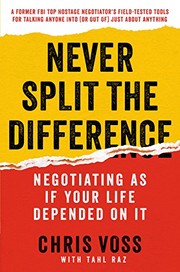
Never Split the Difference
Chris Voss
Negotiating as if your life depended on it. Former FBI negotiator shares tactics—tactical empathy, labelling, mirroring—for high-stakes conversations.
Immediately applicable to client and stakeholder conversations. The “no” and “that’s right” ideas alone are worth the read.
- leadership
- communication

The 7 Habits of Highly Effective People
Stephen Covey
A principle-centered approach to personal and interpersonal effectiveness. Seven habits from dependence to independence to interdependence (be proactive, begin with the end in mind, put first things first, think win-win, seek first to understand, synergise, sharpen the saw).
Classic for a reason. The habits hold up; the “important vs urgent” matrix and “seek first to understand” still shape how I plan and communicate.
- leadership
- productivity

The Psychology of Money
Morgan Housel
Timeless lessons on wealth, greed, and happiness. Short stories and insights on how people think about money, risk, and success—and why behaviour matters more than maths.
One of the best books on money and decision-making I've read. No formulas; lots of wisdom on saving, risk, and staying sane in markets.
- finance
- self-improvement

Start with Why
Simon Sinek
How great leaders inspire everyone to take action. The Golden Circle—Why, How, What—and why starting with purpose and belief drives loyalty and action.
Influential for clarifying purpose and messaging. I use the “why first” idea when helping teams articulate vision and strategy.
- leadership
- communication

Implementing Domain-Driven Design
Vaughn Vernon
A practical guide to applying DDD in real systems. Covers strategic design (bounded contexts, Ubiquitous Language) and tactical patterns (aggregates, entities, value objects, domain events) with code and examples.
The go-to “how to do DDD in code” book after Evans. Concrete patterns and examples; I refer to it when designing aggregates and context boundaries.
- tech
- architecture
- design
Domain-Driven Design Distilled
Vaughn Vernon
A short, readable summary of DDD. Covers the core ideas from Evans and Vernon’s Implementing DDD in a compact form—ideal for quick reference or onboarding.
Handy when you need a fast refresher or to bring someone up to speed on DDD without the full Evans tome.
- tech
- architecture
- design

Zero to One
Peter Thiel
Notes on startups, or how to build the future. Why vertical progress (0 to 1) matters more than copying; monopoly, secrets, and building something new.
Sharp and contrarian. The “0 to 1” lens and emphasis on secrets and monopoly still shape how I think about innovation and strategy.
- leadership
- business

Psycho-Cybernetics
Maxwell Maltz
A program for using your self-image to live a better life. How the brain works like a goal-seeking mechanism and how to align it with the outcomes you want.
Classic on self-image and goal-setting. The ideas have influenced many later books on habits and mindset.
- self-improvement
- psychology

Mastery
Robert Greene
The keys to success and long-term excellence. Apprenticeship, deep practice, and the inner dimension of mastery, with historical and contemporary examples.
Dense and rewarding. I refer to it when thinking about deliberate practice and the path to expertise.
- self-improvement
- leadership

Million Dollar Habits
Brian Tracy
Proven power practices to double and triple your income. Habits of thought and action that high achievers use in career and life.
Practical habits and routines. Complements his other books on goals and productivity.
- productivity
- self-improvement

Goals!
Brian Tracy
How to get everything you want—faster than you ever thought possible. Goal-setting, planning, and daily action.
Clear framework for setting and pursuing goals. I still use the “write it down, break it down” approach.
- productivity
- self-improvement

Antifragile: Things That Gain from Disorder
Nassim Nicholas Taleb
Some things benefit from shocks and volatility. Antifragility beyond resilience—how to thrive in uncertainty and optionality.
Influential and demanding. The antifragility lens and “barbell” idea shape how I think about risk and optionality.
- leadership
- philosophy
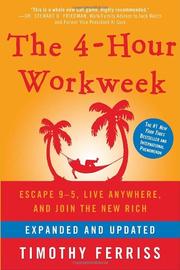
The 4-Hour Workweek
Timothy Ferriss
Escape the 9–5, live anywhere, and join the new rich. Outsourcing, automation, and designing a life of mobility and leverage.
Polarising but full of ideas. The “lifestyle design” and 80/20 thinking still influence how I approach time and leverage.
- productivity
- business

12 Rules for Life: An Antidote to Chaos
Jordan B. Peterson
Twelve practical and profound rules for living. Responsibility, meaning, order and chaos, and how to stand up straight with your shoulders back.
Dense and provocative. The rules and the underlying psychology stick with you long after reading.
- self-improvement
- philosophy

Atomic Habits
James Clear
Tiny changes, remarkable results. How to build good habits and break bad ones—identity, environment, and the 1% improvement compound effect.
One of the best habit books I’ve read. Clear and actionable; the “identity-based habits” idea is especially useful.
- productivity
- self-improvement

Learning Systems Thinking
Diana Montalion
A guide to systems thinking for educators and learners. Core concepts, diagrams, and practices for understanding and teaching systems.
Clear and practical. I use it when introducing systems thinking to teams or when structuring learning material.
- systems-thinking
- leadership

Team Topologies: Organizing Business and Technology Teams for Fast Flow
Matthew Skelton, Manuel Pais
How to organise teams for flow and ownership. Team types, interaction modes, and the reverse Conway manoeuvre for sustainable delivery.
Essential for anyone designing or evolving team structures. The “team-first” and interaction-mode ideas directly inform how I advise on org design.
- tech
- leadership
- devops

Graph Databases
Ian Robinson, Jim Webber, Emil Eifrem
New Ways to Think About Your Data. Graph models, Neo4j, and when and how to use graph databases for connected data.
The go-to introduction to graph databases. Clear models and examples; I refer to it when discussing data modelling for relationships and traversal.
- tech
- architecture

Designing Data-Intensive Applications
Martin Kleppmann
The Big Ideas Behind Reliable, Scalable, and Maintainable Systems. Replication, partitioning, transactions, consistency, batch and stream processing.
One of the best books on data systems I’ve read. Dense but clear; I still use it when reasoning about consistency, replication, and storage.
- tech
- architecture
The Mom Test: How to Talk to Customers and Learn If Your Product Is Any Good
Rob Fitzpatrick
How to ask questions that get honest, useful feedback. Avoid compliments; learn what people actually do and need.
Short and immediately useful. The “Mom Test” rules shape how I run discovery and user conversations.
- business
- communication
Games People Play
Eric Berne
The Psychology of Human Relationships. Transactional analysis: life scripts, games, and strokes—how people interact in predictable patterns.
Classic on interpersonal dynamics. The “games” and “transactions” lens still helps when untangling communication and conflict.
- psychology
- communication
Awaken the Giant Within
Tony Robbins
How to take immediate control of your mental, emotional, physical and financial destiny. Covers beliefs, decisions, and habits that shape outcomes.
Dense and motivational; full of exercises and frameworks. Useful for anyone wanting to work on mindset and taking responsibility for results.
- leadership
- self-improvement

Everyone Communicates, Few Connect
John C. Maxwell
What the most effective people do differently. Connecting with others one-on-one, in groups, and with an audience—through intentional communication and presence.
Practical focus on connection over mere communication. Helpful for consultants and anyone who needs to land messages and build rapport.
- leadership
- communication

Secrets of the Millionaire Mind
T. Harv Eker
Mastering the inner game of wealth. How “money blueprints” and beliefs about money are formed and how to change them to support financial success.
Useful for examining your own money scripts. Some ideas are broad; the emphasis on mindset and habits is still relevant.
- finance
- self-improvement

Knowledge Blueprints
Ronald G. Ross
Designing and deploying business logic for the digital era. How to capture and organise business rules and knowledge so they can be reused, tested, and automated.
Valuable for anyone working with business rules, decision logic, or specification-driven systems. Complements DDD and requirements work.
- tech
- design
- business-rules

Business Rule Concepts
Ronald G. Ross
Getting to the point of knowledge. A primer on business rules—what they are, how to express them, and how they relate to processes and systems.
Clear foundation for rule-based thinking and writing down business logic. Good companion to Knowledge Blueprints and DDD.
- tech
- design
- business-rules

Alchemy: The Surprising Power of Ideas That Don't Make Sense
Rory Sutherland
Why irrational ideas often work better than rational ones. Behavioural economics, advertising, and the power of perceived value and narrative.
Refreshing take on why logic alone fails. Useful for anyone in product, messaging, or persuasion.
- business
- psychology

Eat That Frog!
Brian Tracy
21 great ways to stop procrastinating and get more done in less time. Tackle your biggest, hardest task first—eat the frog.
Simple and actionable. The “do the worst first” rule still helps when I’m overloaded.
- productivity
- self-improvement

Leadership
Brian Tracy
How to lead others to excellence. Delegation, motivation, and the practices of effective leaders.
Straightforward leadership checklist. Helpful when you need a quick refresher on core leadership behaviours.
- leadership
- self-improvement
Brain Wash: Detox Your Mind for Clearer Thinking
David Perlmutter, Austin Perlmutter, Kristin Loberg
How modern life hijacks your brain and what to do about it. Diet, sleep, stress, and digital habits for mental clarity and health.
Useful overview of lifestyle factors that affect focus and mood. Good companion to habit and productivity books.
- self-improvement
- health

Visual Thinking: The Hidden Gifts of People Who Think in Pictures, Patterns, and Abstractions
Temple Grandin
How different kinds of thinkers—visual, pattern, verbal—process the world. Why visual and spatial thinking matter in innovation, design, and problem-solving.
Refreshing perspective on cognitive diversity. Useful for anyone in design, architecture, or teams that mix different thinking styles.
- psychology
- design
Thinking in Systems: A Primer
Donella H. Meadows
A primer on systems thinking: stocks, flows, feedback loops, leverage points. How to see and intervene in complex systems.
Foundational for systems literacy. The leverage points and feedback loops stick with you when analysing organisations or technical systems.
- leadership
- systems-thinking
Domain-Driven Design with .NET Core
Alexey Zimarev
Applying DDD and CQRS in .NET. Tactical patterns, aggregates, events, and practical implementation with C# and .NET Core.
Solid bridge between DDD theory and .NET. Useful when implementing bounded contexts and CQRS in the Microsoft stack.
- tech
- architecture
- design
The Power of Communication
Brian Tracy
How to use communication skills to get what you want. Speaking, listening, and presenting to influence and connect.
Useful basics on clear communication and persuasion. Good for brushing up before important conversations.
- communication
- self-improvement
Domain-Driven Design
Eric Evans
- tech
- architecture
- design
Description
Tackling Complexity in the Heart of Software. Introduces strategic and tactical patterns—ubiquitous language, bounded contexts, aggregates—for modeling complex domains and aligning code with business.
My opinion
Foundational for anyone doing serious software design. The ideas have aged well; the book is dense but repays repeated reading. I still refer to it when untangling domain boundaries and language.